Fox Spirits of the Taiping Guangji
Eighty-three tales of foxes from a tenth-century Chinese anthology
- Original title
- 太平广记 · 狐 (卷四百四十七至四百五十五)
- Author
- Li Fang, chief compiler (925–996)
- Written
- Compiled 977–978, from sources of the 4th to 10th centuries
- Original language
- Classical Chinese
- Culture
- Chinese
- Published so far
- 1 of 83 chapters · next 8 Nov · 186 words · 1 min read
About this book
In the years 977 and 978, scholars at the court of the second Song emperor, Taizong, gathered the strange stories of the past into one enormous anthology. Their leader was the minister Li Fang. They called it the Taiping guangji, the Extensive Records of the Taiping Era: five hundred chapters of tales copied out of hundreds of older books, many of which are now lost. Without it, much of what we know of the Chinese supernatural story before the year 1000 would have disappeared.
The anthology is arranged by subject: immortals, Daoist masters, ghosts, dreams, dragons, tigers. Chapters 447 to 455 are devoted to a single creature, the fox. This book translates that whole section, all eighty-three entries, in the order the compilers gave them.
The fox in Chinese belief. The first entries set out the rules. A fox that lives fifty years can take the shape of a woman; at a hundred it becomes a beautiful woman, a spirit medium, or a man who seduces women; at a thousand years it becomes a Heavenly Fox and communicates with Heaven. The fox is a trickster and a seducer, but it is also learned. It reads books, writes in strange scripts, sits examinations of its own, and studies the Daoist arts until it can outwit the masters who teach it. In these tales it impersonates bodhisattvas, Buddhas and dead relatives, marries into official families, and sometimes stays faithful to the end.
What you will find here. The tales span several centuries. The earliest come from collections of the 4th century and are only a few lines long. The richest come from the Tang dynasty (618–907), when the fox story became a literary form of its own. Among them is the Story of Miss Ren by Shen Jiji, written in 781, one of the most celebrated tales in Chinese literature. Others are almost unknown outside China. At the end of each tale, a short line names the older book it was taken from.
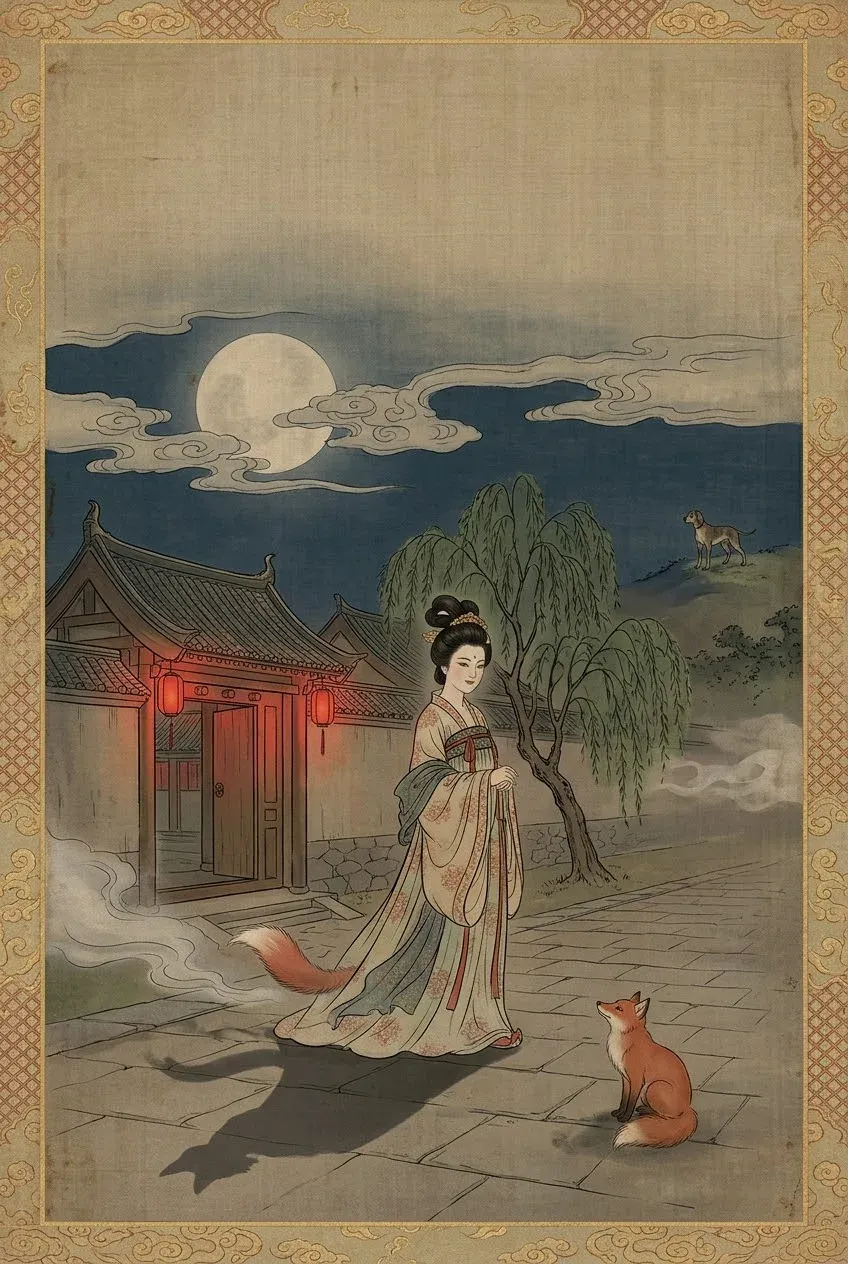
About this translation. The English follows the classical text sentence by sentence. Nothing is summarised or skipped, and nothing is added to the stories themselves. Names are given in pinyin, with the Chinese characters in a note at their first appearance. Old units of measure, official titles and Buddhist and Daoist terms are explained in the notes. So are places where the old text is damaged or uncertain, and the readings chosen there. The translation follows the old printed text of the anthology. Where that text is plainly corrupt, the reading adopted is given in a note. The translation was prepared with the help of AI and checked against the original. It does not draw on any earlier translation. The cover and the illustration at the start of the book are modern images generated with AI for this edition; they are not old Chinese paintings.
A note for readers. These are stories for adults. Some are funny, some are eerie, and a few are cruel. Miss Ren includes an attempted assault, which the text does not dwell on.
Contents
- On Foxes 说狐 1 min read
Next chapter: Sunday, 8 November. 82 more chapters to come. Follow via RSS.